
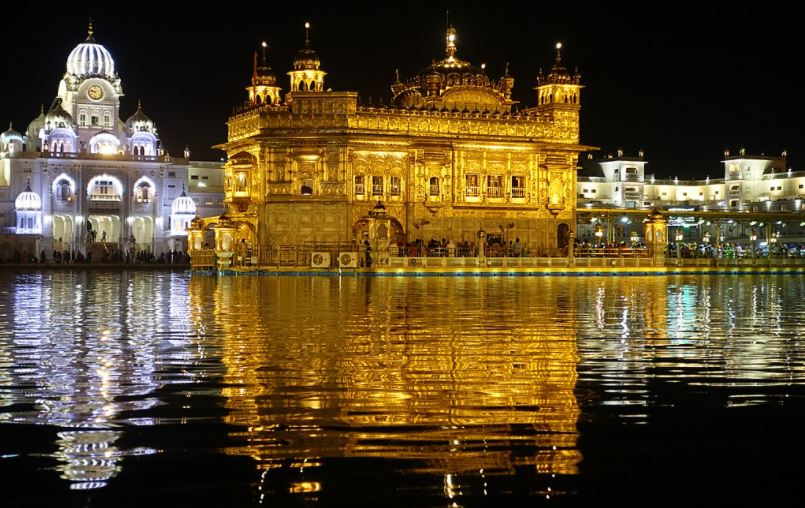
Golden temple is also known as ‘Harmandir Sahib’. Harmandir is a combination of two words ‘Har’ as God and ‘Mandir’ as Temple. Sahib is a word to express respect. Golden Temple is located in City Amritsar (Punjab, India).
How Golden Temple came into existence?
The story of Golden Temple is connected with the ‘Pool of Nectar’ which surrounds the Golden Temple building. This is the story of Rajni, Daughter of Raja Duni Chand. One day Raja Duni Chand brought some gifts for his all three daughters. The two daughters praised her father for the gifts. But Rajni was devotee of Almighty and had blind faith in supreme power of God. She praised God for the gifts and said that gifts were actually sent by God, her father was only the medium to deliver those gifts. Raja got angry after hearing this and made his daughter marry a patient of leprosy. But Rajni believed in God and accepted the things life gave her.
She started struggling for the treatment of her husband. One day she placed the basket containing her husband on the bank of a pool and went away for some task. Her husband saw that some crows were plunging into the water of that pool and coming out converted into a white bird. He too plunged into the water and came out turning into young man with all diseases cured. Since that time, the pool is popularly to be known as ‘Pool of Nectar’.
Who founded Golden Temple?
Guru Amardas, 3rd Guru planned to dig the Holy Tank in 1573. But the guidelines were handed over to 4th Guru, Guru Ramdas to execute the plan. Guru Ramdas executed things as per the plan with the help of experienced and intelligent assistant ‘Baba Budhha’. Along with the planning of Holy Tank, Guru Ramdas established a small town in 1577. Which is now a beautiful & Tourist city with the name of Amritsar.
Fifth Guru of Sikhs Guru “Arjan Dev” designed the layout of the building to be built in the centre of pool. Guru especially invited Muslim Saint Hazrat Mian Mir of Lahore to lay the foundation of Golden Temple. Upon the construction of building, Guru Arjan installed ‘Adi Granth’ inside Golden Temple. ‘Adi Granth’ is Holy Book of Sikhism with latest name of ‘Guru Granth Sahib’. With the vision to make common place of worship for Sikhs & people from other religions as well.
Guru Arjan built the building one step lower than the surrounding areas to emphasize humility and encourage one to eliminate ego before entering premises. The layout was designed with four doors at all four directions with the vision to allow entrance to people from all religions, sex and casts. With continues efforts, Guru Arjan declared Amritsar as a primary Sikh pilgrimage Destination. Thus ‘Harmandir Sahib’ started to be considered as the ‘Temple of God’.
History of Attacks on Golden Temple during Mughal Era
Golden Temple faced many destructive events in history. It was destroyed twice as history says. Once by Mughal invaders in 16th century and second time it was destroyed by Indian army troops on the orders of Indian Prime Minister. But it was gradually repaired & rebuilt both the times. Below are the major historic events this place faced:
- In 1737, the Mughal governor ordered the capture of the custodian of the Golden Temple named Mani Singh and executed him. He appointed Masse Khan as the police commissioner who then occupied the Temple and converted it into his entertainment center with dancing girls. He befouled the pool. Sikhs avenged the sacrilege of the Golden Temple by assassinating Masse Khan inside the Temple in August 1740.
- In 1746, another Lahore official Diwan Lakhpat Rai working for Yahiya Khan, and seeking revenge for the death of his brother, filled the pool with sand. In 1749, Sikhs restored the pool when Muin ul-Mulk slackened Mughal operations against Sikhs and sought their help during his operations in Multan.
- In 1757, the Afghani ruler Ahmad Shah Durrani, also known as Ahmad Shah Abdali, attacked Amritsar and desecrated the Golden Temple. He had waste poured into the pool along with entrails of slaughtered cows, before departing for Afghanistan. The Sikhs restored it again.
- In 1762, Ahmad Shah Durrani returned and had the Golden Temple blown up with gunpowder. Sikhs returned and celebrated Diwali in its premises. In 1764, Baba Jassa Singh Ahluwalia collected donations to rebuild the Golden Temple. A new main gateway (Darshani Deorhi), causeway and sanctum were completed in 1776, while the floor around the pool was completed in 1784. The Sikhs also completed a canal to bring in fresh water from Ravi River for the pool.
History of attack on Golden Temple in 1984 (Operation BlueStar)
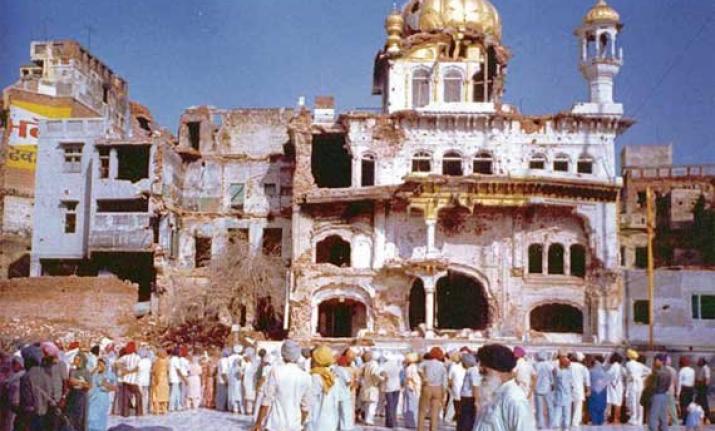
The violence took place at Amritsar was in 1984. This was a political clash actually, when troops of Indian Army attacked Golden Temple complex on the orders of Prime Minister Indira Gandhi. This violent political clash is known as the ‘Operation Blue Star’. Many innocent Sikhs were killed in Golden Temple complex for no reason. The purpose of this operation was to evacuate extremists from the complex. Reports says that more than 1200 people killed in this operation. This attack damaged Akal Takhat, which was gradually repaired after the attack.
Reconstruction of Golden Temple in Maharaja Ranjit Singh’s Era
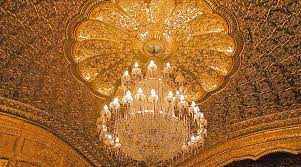
In 18th century, Maharaja Ranjit Singh (Sikh Emperor in Punjab) covered the Dome and inner part of building with Gold plates. Thus the name derived Golden Temple. It is said that Ranjit Singh donated about 100kg of Gold to cover the building. Later on it increased to about 750kg, which covers the whole building (inside & outside both).
Declaration of Amritsar as a Holy City
Later on British emperors started visiting Amritsar frequently. The British resident, H.M. Lawrence issued an order in 1847 asking English people to visit Sikh centres by following the Sikh protocols. Train service started between Lahore and Amritsar in 1862. The 1st Sikh college was established in 1892 with the name ‘Khalsa College’. Guru Nanak University was established in 1969 to expand education. British declared Amritsar a ‘Holy City’ in 1915.
Historical places inside Golden Temple premises
Akal Takhat
Amritsar is also known as the Supreme centre of Authority for Sikhism. All the major decisions related to Sikhism take place at Akal Takhat (Sikh Parliament). Guru Hargobind, the 6th Guru of Sikhs established Akal Takhat in 17th century. It is highest place of authority & Justice on earth for Sikhs. Guru Hargobind gave the grade of ‘Supreme Court of Sikhs‘ to Akal Takhat.
Ramgharia Bungas
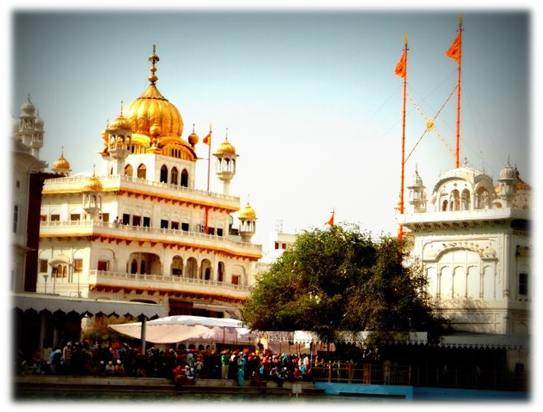
The Ramgarhia Bungas were built in the 18th century by Sardar Jassa Singh Ramgarhia (1723–1803), one of the most prominent Sikh leaders and a renowned warrior of the Ramgarhia Misl. Ramgarhia Bungas were built strategically to defend the Golden Temple complex against attacks.
During the turbulent times of the 18th century, Amritsar suffered repeated attacks from Ahmad Shah Abdali and other Afghan invaders. The Ramgarhia Misl played a crucial role in defending the Golden Temple. The Ramgarhia Bunga served as the residence, military post and command center for Jassa Singh Ramgarhia and his soldiers.
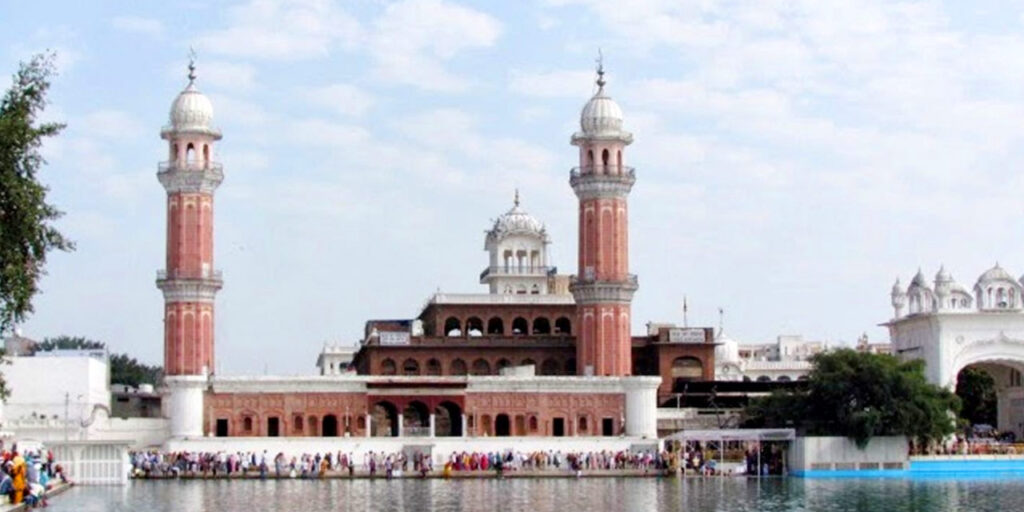
Clock Tower
The Clock Tower building was designed by John Gordon, featuring characteristic red brickwork inspired by European cathedral architecture. Construction began in 1862 and concluded in 1874. Roughly seven decades later, the Sikh community chose to dismantle the tower, replacing it with a new entrance that better complemented the spiritual and aesthetic harmony of the Golden Temple complex.
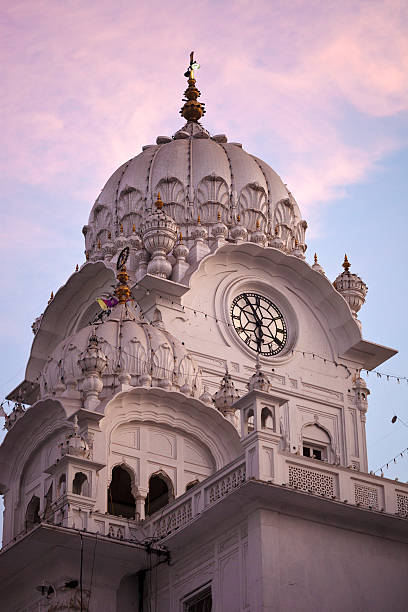
Beri Tree
The historical Ber Tree is situated right at the entrance of ghanta ghar entrance with the clock. It is called the Ber Baba Buddha. It is believed in the Sikh tradition to be the tree where Baba Buddha sat to supervise the construction of the pool and the temple.
Another tree is called Laachi Ber, believed to the one under which Guru Arjan rested while the temple was being built.
The third one is called Dukh Bhanjani Ber, located on the other side of the holy pool. It is believed that this tree was the location where the husband of Rajni was cured of his leprosy after taking a dip in the pool. As per the Sikh tradition this tree is believed to be the tree of “suffering remover“.