
Amritsar is a historical and one of the largest city of India’s Northern state Punjab. It lies about 27km to the east of Pakistan Border and is the closest city to Lahore (Pakistan). It is big commercial and transportation hub in Punjab.
When & Who founded Amritsar city?
Amritsar was founded by 4th Guru of Sikhs ‘Guru Ramdas’ in 1577. The historical name of Amritsar is Ramdaspur, which was derived from name ‘Chakk Ramdas’. The name Amritsar is derived from the Holy ‘Pool of Nectar’, which surrounds the building of ‘Golden Temple’. The word Amritsar is a combination of 2 cultural words ‘Amrit’ as ‘Nectar’ & ‘Sar’ as ‘Pool’.
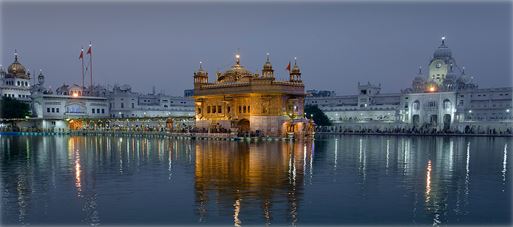
The original plan to form Amritsar city was created by ‘Guru Amardas’, the 3rd Guru of Sikhs. Later on the guidelines were given to ‘Guru Ramdas’ to execute the project. Guru Ramdas acquired this land in 1574 from Akbar (Mughal Emperor) to start mining of the Holy Pool. History says that the land was bought by Guru Ramdas by paying Rs.700. All the arrangements were made to execute the project with the help of some intelligent & experienced assistants.
‘Guru ArjanDev’, the 5th Guru then convinced the idea to build a place of worship in the centre of this Holy pool. Then a Gurudwara (Sikh Temple) was established in the centre of the Pool. The unbricked sides of the pool were bricked and stairs were made on the sides. Unlike other temples having one gate for entrance & Exit, Guru Arjan made it open from all four sides. The vision behind to make four gates was to make it accessible to every person with any caste, sex or religion. This place was revenue free and exempted from the taxes by Mughal government. Amritsar city is well connected to major cities of India by Road, Rail & Air.
After mining of the pool, the place became the Headquarter of Sikhs. The project was going smooth and Guru Ramdas personally supervised it. A small market was established around to fulfil the daily basic requirements.
History of attacks on Amritsar during the Mughal Era
Amritsar, today known as the spiritual heart of Sikhism, has witnessed the faith, struggle and resilience for centuries. But before it became a symbol of peace and devotion, the city has gone through numerous invasions and attacks during the Mughal period. Each one testing the strength of its people and the foundations of Sikh faith. Below are some of the historical events of clash in Mughal era:
The Early Mughal Sikh Tensions (Late 1500s)
Guru RamDas founded Amritsar under the peaceful rule of Emperor Akbar, who had friendly ties with the Sikh Gurus. The relationship began to sour later after Akbar’s rule. Guru Arjan Dev, the 5th Sikh Guru, was executed in 1606 on the orders of Emperor Jahangir. This marked the first major conflict between the Sikh community and the Mughal throne.
Repeated Conflicts Under Emperor Shah Jahan (1628–1658)
Shah Jahan grew hostile toward the growing influence of Sikhs. He ordered the demolition of the Akal Takht, which Guru Hargobind (6th Guru) had established as a symbol of religious authority beside the Golden Temple.
In 1634, the Mughal army attacked Amritsar after a confrontation between Sikhs and Mughal forces near Amritsar. The Mughals were defeated, and this battle became one of the earliest examples of organized Sikh resistance.
Destruction of the Golden Temple in Aurangzeb’s Reign (1658–1707)
Amritsar faced repeated raids by Mughal governors of Lahore who saw the growing Sikh presence as threat during Aurangzeb’s reign. The Golden Temple was attacked and desecrated multiple times. Mughal forces filled the sacred pool with debris and even blood after massacres.
Zakariya Khan’s Brutal Reign (1726–1745)
Zakariya Khan, though not a Mughal emperor himself, but the Mughal Governor of Lahore under Emperor Muhammad Shah, was infamous for his brutality against Sikhs. He ordered the execution of Sikhs on the sight and started rewarding for cutting their heads.
Amritsar was raided again during his rule, the Golden Temple was desecrated, and the sacred pool was filled with unpleasant dirt. Despite this, Sikhs would secretly rebuild and perform prayers at night, showing unmatched devotion.
Ahmad Shah Abdali’s Raids on Amritsar (1748–1767)
While technically not a Mughal, Ahmad Shah Abdali’s invasions had Mughal support and are part of the same historical events. Abdali’s forces raided Amritsar multiple times, looting and destroying the Golden Temple. The worst attack came in 1762, where tens of thousands of Sikhs were massacred. The Golden Temple was blown up, yet Sikhs rebuilt it each time.
The Story Behind the Golden Temple’s Gold Plating
After years of Mughal and Afghan assaults, the Sikh community united to take control of Punjab. By the late 18th century, under Maharaja Ranjit Singh, Amritsar was finally rebuilt, restored and protected. The Golden Temple was gold plated during his reign (early 1800s), symbolizing the end of centuries of Mughal aggression.
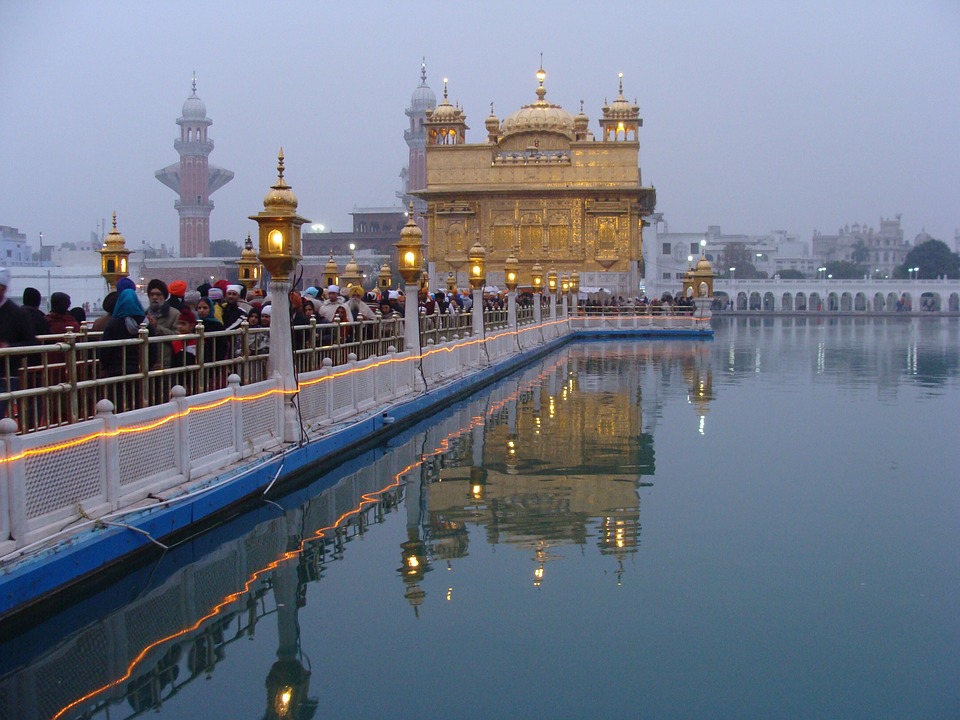
History of planned attack on Golden Temple in 1984 (Operation Bluestar)
Another violence took place at Amritsar was in 1984. This was a political clash actually, when troops of Indian Army attacked Golden Temple complex on the orders of Prime Minister Indira Gandhi. This violent political clash is known as the ‘Operation Blue Star’. Many innocent Sikhs were killed in Golden Temple complex for no reason. The purpose of this operation was to evacuate extremists from the complex. Reports says that more than 1200 people killed in this operation. This attack damaged Akal Takhat, which was gradually repaired after the attack.
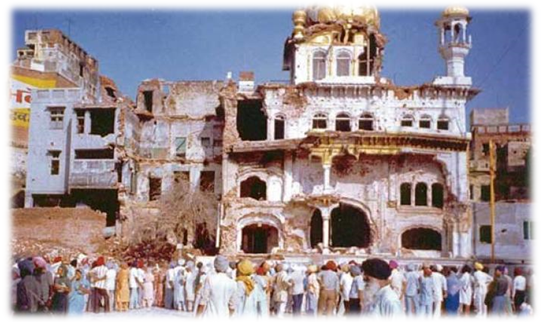
Story of the Jallianwala Bagh Massacre: What Happened in Amritsar in 1919
In 1919, the incident happened which made the city silent was Jallianwala Bagh Massacre. This happened when the British Government was ruling the country. On 13th April 1919, more than 20,000 people gathered at Jallianwala Bagh, Amritsar for general meeting and to celebrate Baisakhi. Baisakhi is one of the major festival celebrated in Punjab. On the orders of senior British military officer Reginald Edward Harry Dyer, the troops fired & killed more than 350 unarmed Indians. The marks of bullets still can be seen on the walls of site.
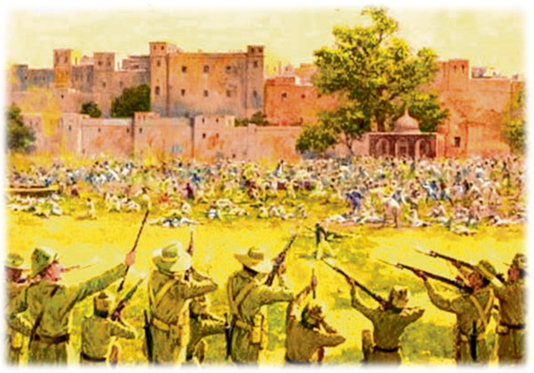
The untold history of 1947 Partition Riots happened in Amritsar
The riots took place in 1947, when British Govt. divided India into two parts (India & Pakistan). Due to this partition, Punjab too was divided into two separate countries. It left huge impact in the history of Amritsar, as Amritsar was now the border between India & Pakistan. Many families got separated and many innocent people killed in these Anti Muslim & Sikh riots for no reason. This border is popular with the name of Wagah Border. Most of the people who come to Amritsar visits Wagah Border to see retreat ceremony, which happens every day in evening.
12 Historic Gates of Amritsar and their Stories
Before modern Amritsar grew into a bustling urban center, it was a fortified walled city built for protection and control. The city once had twelve historic gates, each opening toward a major route or region and serving as an entry point for traders, travelers, and devotees visiting the Golden Temple. To protect the holy city and its growing population, Sikh Misls fortified Amritsar in 18th century.
The gates were closed every night for safety during the Mughal and Afghan invasions. Inside the walls, the streets were narrow and bustling with markets, homes and shrines. By the 1870s, the British colonial administration began demolishing parts of the wall and old gates to expand trade routes and modernize city access. Only a few original gates like Lohgarh, Hall Gate, Lahori Gate, and Hathi Gate still survive today.
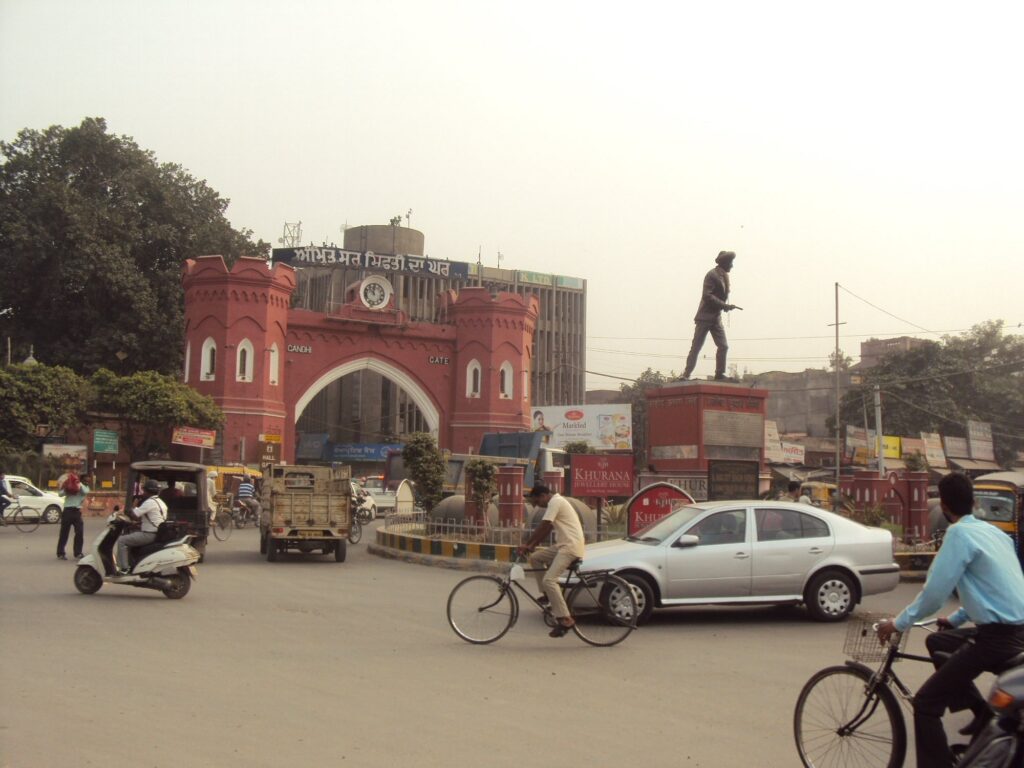
Names of historical gates of Amritsar:
- Lohgarh Gate
- Hathi Gate
- Hall Gate
- Gilwali Gate
- Lahori Gate
- Rambagh Gate
- Khazana Gate
- Sultanwind Gate
- Chatiwind Gate
- Bhagtanwala Gate
- Putlighar Gate
- Sharifpura Gate
Declaration of Amritsar as a Holy City
Later on British emperors started visiting Amritsar frequently. The British resident, H.M. Lawrence issued an order in 1847 asking English people to visit Sikh centres by following the Sikh protocols. Train service started between Lahore and Amritsar in 1862. The 1st Sikh college was established in 1892 with the name ‘Khalsa College’. Guru Nanak University was established in 1969 to expand education. British declared Amritsar a ‘Holy City’ in 1915.